The art of cooking
AI CHEF Blog

Get the Perfect Cut: A Complete Guide to Knife Skills

Knife skills are one of the most essential aspects of cooking, yet they are often overlooked by home cooks. Mastering the art of cutting not only improves the aesthetics of your dishes but also enhances the cooking process, ensuring even cooking and better flavor infusion. In this comprehensive guide, we will explore the different types of knives, essential cutting techniques, and tips for maintaining your knives to achieve the perfect cut every time.
1. Understanding Different Types of Knives
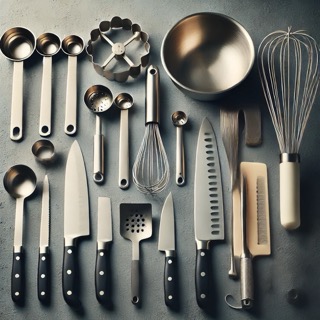
Before diving into knife skills, it's crucial to understand the different types of knives available. Each knife serves a specific purpose, so having a variety in your kitchen is beneficial.
- Chef's Knife: A versatile knife used for chopping, slicing, and dicing. Typically 8-10 inches long.
- Paring Knife: A small knife with a short blade, ideal for precision tasks like peeling and trimming.
- Serrated Knife: Perfect for cutting through foods with a tough exterior and soft interior, such as bread or tomatoes.
- Boning Knife: A thin, flexible blade used for deboning meat and fish.
- Utility Knife: A mid-sized knife, useful for a variety of tasks.
2. Essential Knife Skills
Now that you know the types of knives, let’s explore some essential knife skills that will elevate your cooking.
2.1 The Proper Grip
How you hold your knife can significantly impact your control and accuracy. Here’s how to achieve a proper grip:
- Hold the handle of the knife with your dominant hand.
- Place your thumb and index finger on either side of the blade, just above the handle, for better control.
- Wrap your remaining fingers around the handle.
2.2 The Claw Technique
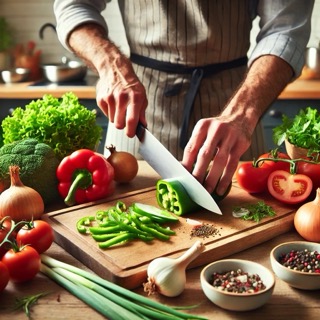
To ensure safety while cutting, use the claw technique to hold your food:
- Curve your fingers under and tuck your fingertips in, resembling a claw.
- Keep your knuckles facing the blade to avoid cuts.
- Slice with the knife while guiding the food with your knuckles.
2.3 Chopping
Chopping is a fundamental cutting technique. Here’s how to do it:
- Place the food item on a cutting board.
- Using your chef's knife, start cutting down in a rocking motion, moving the knife from tip to heel.
- Keep your fingers in a claw grip and maintain your knife’s angle for consistency.
2.4 Slicing
Slicing is used for creating thin pieces of food:
- Position the food item securely on the cutting board.
- Use a long, smooth motion to slice through the food without applying too much pressure.
- For meats, allow the knife to follow the natural grain for clean slices.
2.5 Dicing
Dicing is the process of cutting food into uniform cubes. Here’s how to achieve perfectly diced vegetables:
- Start by slicing the food lengthwise into strips.
- Rotate the strips and cut crosswise to create cubes.
- For consistent sizes, ensure your initial slices are even.
2.6 Julienne
Julienning involves cutting food into long, thin sticks:
- Slice the food item into planks.
- Stack the planks and cut them into thin strips.
2.7 Mincing
Mincing refers to cutting food into very small pieces, often used for garlic or herbs:
- Use a rocking motion with your knife to finely chop the food.
- Gather the pieces and continue chopping until desired size is achieved.
3. Knife Maintenance Tips
Proper maintenance of your knives is crucial for longevity and performance. Here are some tips to keep your knives in top shape:
- Regularly Sharpen Your Knives: A sharp knife is safer and more efficient. Use a whetstone or a honing rod regularly.
- Hand Wash Your Knives: Avoid putting knives in the dishwasher, as the heat and detergent can damage the blade and handle.
- Store Properly: Use a knife block, magnetic strip, or blade guards to protect the edges from damage.
- Use the Right Cutting Surface: Avoid cutting on glass or stone surfaces; opt for wooden or plastic cutting boards.
4. Safety Tips
Knife safety is paramount in the kitchen. Here are some essential safety tips to keep in mind:
- Always cut away from your body and keep your fingers clear of the blade.
- Use a stable cutting board to prevent slipping.
- Never try to catch a falling knife.
- Be aware of your surroundings and avoid distractions while using knives.
5. Practice Makes Perfect
Like any skill, knife skills improve with practice. Start by practicing basic cuts on inexpensive vegetables, and gradually work your way up to more complex tasks. Consider enrolling in a cooking class or watching online tutorials to enhance your learning.
Conclusion
Mastering knife skills can significantly elevate your cooking experience. By understanding the different types of knives, practicing essential cutting techniques, maintaining your knives, and prioritizing safety, you will be well on your way to getting the perfect cut every time. So grab your favorite knife and start chopping!